Categories
Bookkeeping

Bookkeeping for Nonprofits: A Complete Guide

bookkeeping for nonprofit organizations

The Internal Revenue Service (IRS) is responsible for overseeing these organizations and ensuring they comply with applicable tax laws. Nonprofits must follow Generally Accepted Accounting Principles (GAAP), established by the Financial Accounting Standards Board (FASB), to prepare accurate and consistent financial statements. This allows donors, board members, and other stakeholders to assess the organization’s performance and financial stability. Organizing and maintaining receipts is essential for transparent and accurate financial reporting and ensures you’re audit-ready. It ensures their finances are managed responsibly, maintains compliance with regulations, and provides insights to make informed decisions. Key components include a well-structured chart of accounts, fund accounting, accurate tracking of donor contributions and grants, and regular financial reporting.

Tools and Software for Non Profit Bookkeeping

Effective bookkeeping is crucial for legal compliance and transparent reporting, informed decision-making, and fostering trust among donors and 5 Main Benefits of Accounting Services for Nonprofit Organizations stakeholders. The primary goal of nonprofit accounting is to ensure that funds are used efficiently and effectively to support the organization’s mission. This involves tracking income from various sources such as donations, grants, and fundraising events, while also monitoring expenses to ensure alignment with budgetary constraints. By maintaining accurate financial records, nonprofits can demonstrate their financial health and build trust with their supporters. Nonprofit accounting refers to the specialized financial management practices designed to meet the unique needs of nonprofit organizations.

bookkeeping for nonprofit organizations

Accounting Software

At the core of nonprofit accounting are the financial statements, which typically include the Statement of Financial Position, Statement of Activities, and Statement of Cash Flows. S assets, liabilities, revenues, and expenses, allowing stakeholders to assess its financial stability. Additionally, nonprofits must prepare budgets that reflect their strategic goals and operational plans. Additionally, nonprofit accounting helps organizations comply with legal and regulatory requirements. Nonprofits are often subject to specific financial reporting standards and must adhere to guidelines set by governing bodies.

bookkeeping for nonprofit organizations

Small Businesses

bookkeeping for nonprofit organizations

This process helps identify and correct discrepancies, preventing potential issues down the line. This is why we encourage you to learn about the three primary financial statements and utilize a budget. Understanding financial statements and budgeting will help https://greatercollinwood.org/main-benefits-of-accounting-services-for-nonprofit-organizations/ you plan and strategize for the future of your organization. Ask your bank about your options regarding not-for-profit accounts or check out this list of best non-profit bank accounts. When you outsource your bookkeeping you not only save time, but get accurate financial insights so you can make informed decisions for your business.

bookkeeping for nonprofit organizations

bookkeeping for nonprofit organizations

Nonprofit accounting, similar to other aspects of your nonprofit’s strategy, requires your organization to compile several key reports and documents to organize your financial data. In the intricate world of nonprofit management, sound financial practices are the bedrock of success. As your organization strives to make a positive impact, having a trusted partner for nonprofit accounting is paramount. Organized record-keeping is crucial for accounting audits, compliance reviews, and financial analysis.

  • Whereas, nonprofit organizations need to monitor multiple sources, including fundraising events and grants, while maintaining their financial position.
  • Donor data is useful for building relationships, but it can clog up your accounting system.
  • As your nonprofit grows, you’ll likely need bookkeeping and accounting expertise.
  • It has an impressive suite of core features including billing and invoicing, collections, cash management, fixed asset management, and even payroll capabilities.
  • Linda Rost started Better Bookkeepers in 1999, and since then the team has worked for over two decades.
  • In addition, they can track expenses and capture receipts to simplify tax filings and report to donors the nonprofits’ overhead-versus-project costs.
  • Internal controls may include segregation of duties, regular bank reconciliations, and review processes for financial transactions.
  • These contributions have no stipulations and can be utilized freely to accomplish the organization’s diverse needs, be it operational costs, programs, or projects.
  • Learn the six essential steps that every nonprofit should take to determine the ideal reserve fund amount.

Nonprofit accounting is the unique process that charitable organizations use to plan, record, and report their finances. The core of nonprofit accounting is accountability, meaning your goal in your accounting practices should be ensuring honesty and transparency with your donors, other stakeholders, and the government. At ASNY, we are dedicated to establishing a resilient financial foundation for charter schools and nonprofit organizations by optimizing operations through accounting excellence. Some donations and grants will come into your organization restricted for specific purposes. Nonprofit fund accounting differs from for-profit accounting because it ensures accountability to the donors’ wants and tracks how these funds are allocated.

  • Understanding these fundamentals is vital to maintaining transparency, accountability, and trust among the stakeholders they serve.
  • Let’s review the unique bookkeeping requirements that relate to not for profits.
  • Their mission is usually anchored on a cause or social purpose, not on the generation of profits.
  • Being exempted from tax is one of the goals that nonprofit organizations have.
  • There is some overlap between bookkeeping and HR departments when it comes to payroll, but most small to mid-sized organizations delegate this task to the non-profit bookkeeper.

Revenue Recognition

You have to pay an extra fee for payroll services, starting at $45 per month. But when you’re trying to paste together your numbers with a part-time bookkeeper or a volunteer accountant, it’s nearly impossible to get the transparency you need to run your nonprofit organization. The Statement of Functional Expenses offers a more detailed view of how a nonprofit allocates its expenses across various functions. It categorizes the expenses by both nature (such as salaries, rent, or supplies) and function (program services, management, and fundraising). Nonprofits can indeed make a profit, as it is essential for their sustainability and continuity.
Categories
Bookkeeping

Bookkeeping for Nonprofits: A Complete Guide

bookkeeping for nonprofit organizations

The Internal Revenue Service (IRS) is responsible for overseeing these organizations and ensuring they comply with applicable tax laws. Nonprofits must follow Generally Accepted Accounting Principles (GAAP), established by the Financial Accounting Standards Board (FASB), to prepare accurate and consistent financial statements. This allows donors, board members, and other stakeholders to assess the organization’s performance and financial stability. Organizing and maintaining receipts is essential for transparent and accurate financial reporting and ensures you’re audit-ready. It ensures their finances are managed responsibly, maintains compliance with regulations, and provides insights to make informed decisions. Key components include a well-structured chart of accounts, fund accounting, accurate tracking of donor contributions and grants, and regular financial reporting.

Tools and Software for Non Profit Bookkeeping

Effective bookkeeping is crucial for legal compliance and transparent reporting, informed decision-making, and fostering trust among donors and 5 Main Benefits of Accounting Services for Nonprofit Organizations stakeholders. The primary goal of nonprofit accounting is to ensure that funds are used efficiently and effectively to support the organization’s mission. This involves tracking income from various sources such as donations, grants, and fundraising events, while also monitoring expenses to ensure alignment with budgetary constraints. By maintaining accurate financial records, nonprofits can demonstrate their financial health and build trust with their supporters. Nonprofit accounting refers to the specialized financial management practices designed to meet the unique needs of nonprofit organizations.

bookkeeping for nonprofit organizations

Accounting Software

At the core of nonprofit accounting are the financial statements, which typically include the Statement of Financial Position, Statement of Activities, and Statement of Cash Flows. S assets, liabilities, revenues, and expenses, allowing stakeholders to assess its financial stability. Additionally, nonprofits must prepare budgets that reflect their strategic goals and operational plans. Additionally, nonprofit accounting helps organizations comply with legal and regulatory requirements. Nonprofits are often subject to specific financial reporting standards and must adhere to guidelines set by governing bodies.

bookkeeping for nonprofit organizations

Small Businesses

bookkeeping for nonprofit organizations

This process helps identify and correct discrepancies, preventing potential issues down the line. This is why we encourage you to learn about the three primary financial statements and utilize a budget. Understanding financial statements and budgeting will help https://greatercollinwood.org/main-benefits-of-accounting-services-for-nonprofit-organizations/ you plan and strategize for the future of your organization. Ask your bank about your options regarding not-for-profit accounts or check out this list of best non-profit bank accounts. When you outsource your bookkeeping you not only save time, but get accurate financial insights so you can make informed decisions for your business.

bookkeeping for nonprofit organizations

bookkeeping for nonprofit organizations

Nonprofit accounting, similar to other aspects of your nonprofit’s strategy, requires your organization to compile several key reports and documents to organize your financial data. In the intricate world of nonprofit management, sound financial practices are the bedrock of success. As your organization strives to make a positive impact, having a trusted partner for nonprofit accounting is paramount. Organized record-keeping is crucial for accounting audits, compliance reviews, and financial analysis.

  • Whereas, nonprofit organizations need to monitor multiple sources, including fundraising events and grants, while maintaining their financial position.
  • Donor data is useful for building relationships, but it can clog up your accounting system.
  • As your nonprofit grows, you’ll likely need bookkeeping and accounting expertise.
  • It has an impressive suite of core features including billing and invoicing, collections, cash management, fixed asset management, and even payroll capabilities.
  • Linda Rost started Better Bookkeepers in 1999, and since then the team has worked for over two decades.
  • In addition, they can track expenses and capture receipts to simplify tax filings and report to donors the nonprofits’ overhead-versus-project costs.
  • Internal controls may include segregation of duties, regular bank reconciliations, and review processes for financial transactions.
  • These contributions have no stipulations and can be utilized freely to accomplish the organization’s diverse needs, be it operational costs, programs, or projects.
  • Learn the six essential steps that every nonprofit should take to determine the ideal reserve fund amount.

Nonprofit accounting is the unique process that charitable organizations use to plan, record, and report their finances. The core of nonprofit accounting is accountability, meaning your goal in your accounting practices should be ensuring honesty and transparency with your donors, other stakeholders, and the government. At ASNY, we are dedicated to establishing a resilient financial foundation for charter schools and nonprofit organizations by optimizing operations through accounting excellence. Some donations and grants will come into your organization restricted for specific purposes. Nonprofit fund accounting differs from for-profit accounting because it ensures accountability to the donors’ wants and tracks how these funds are allocated.

  • Understanding these fundamentals is vital to maintaining transparency, accountability, and trust among the stakeholders they serve.
  • Let’s review the unique bookkeeping requirements that relate to not for profits.
  • Their mission is usually anchored on a cause or social purpose, not on the generation of profits.
  • Being exempted from tax is one of the goals that nonprofit organizations have.
  • There is some overlap between bookkeeping and HR departments when it comes to payroll, but most small to mid-sized organizations delegate this task to the non-profit bookkeeper.

Revenue Recognition

You have to pay an extra fee for payroll services, starting at $45 per month. But when you’re trying to paste together your numbers with a part-time bookkeeper or a volunteer accountant, it’s nearly impossible to get the transparency you need to run your nonprofit organization. The Statement of Functional Expenses offers a more detailed view of how a nonprofit allocates its expenses across various functions. It categorizes the expenses by both nature (such as salaries, rent, or supplies) and function (program services, management, and fundraising). Nonprofits can indeed make a profit, as it is essential for their sustainability and continuity.

Categories
Bookkeeping

Last In, First Out LIFO: The Inventory Cost Method Explained

lifo periodic inventory method

A member of the CPA Association of BC, she also holds a Master’s Degree in Business Administration from Simon Fraser University. In her spare time, Kristen enjoys camping, hiking, and road tripping with her husband and two children. The firm offers bookkeeping and accounting services for business and personal needs, as well as ERP consulting and audit assistance. GAAP sets accounting standards so that financial statements can be easily compared from company to company. GAAP sets standards for a wide array of topics, from assets and liabilities to foreign currency and financial statement presentation. Using the newest goods means that your cost of goods sold is closer to market value than if you were using older inventory items.

lifo periodic inventory method

Income Statements for Merchandising Companies and Cost of Goods Sold

LIFO, or Last In, First Out, is an accounting system that assigns value to a business’s inventory. It assumes that newer goods are sold first and older goods are sold afterward. This is why LIFO creates higher costs and lowers net income in times of inflation.

  • This method is exactly opposite to first-in, first-out method.
  • We do not know what happens for the rest of the month because it has not happened yet.
  • Being systematic is the key to understanding how the LIFO method works.
  • If LIFO affects COGS and makes it more significant during inflationary times, we will have a reduced net income margin.

Problems Related to the LIFO Method

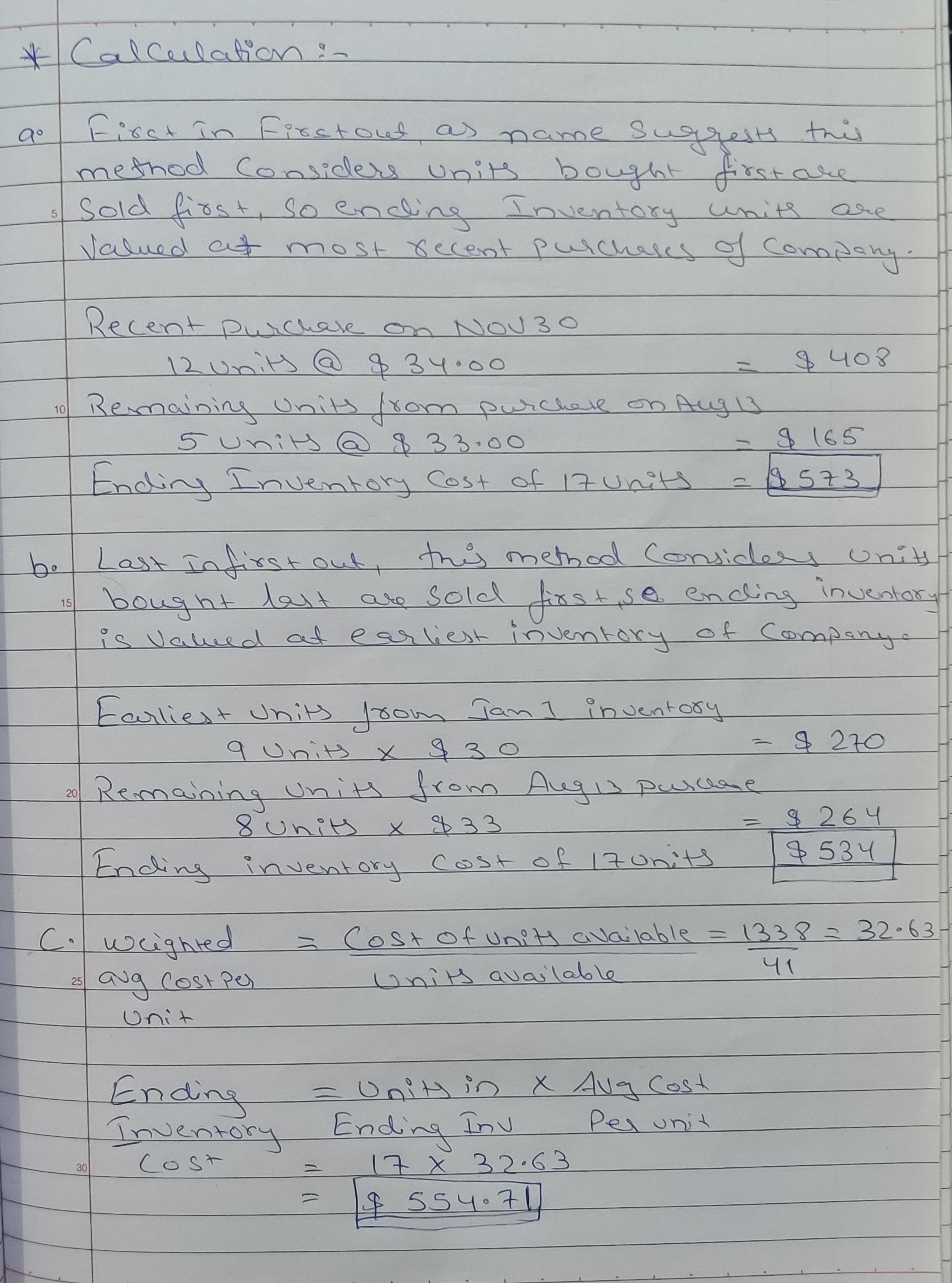
The example above shows how inventory value is calculated under a perpetual inventory system using the LIFO method. Deducting the cost of sales from the sales revenue gives us the amount of gross profit. For example, suppose a shop sells one of the two identical pairs of shoes in its inventory. One pair cost $5 and was purchased in January, and the second pair was purchased in February and cost $6 unit. In LIFO periodic system, the 120 units in ending inventory would be valued using earliest costs. Kristen Slavin is a CPA with 16 years of experience, specializing in accounting, bookkeeping, and tax services for small businesses.

Part 2: Your Current Nest Egg

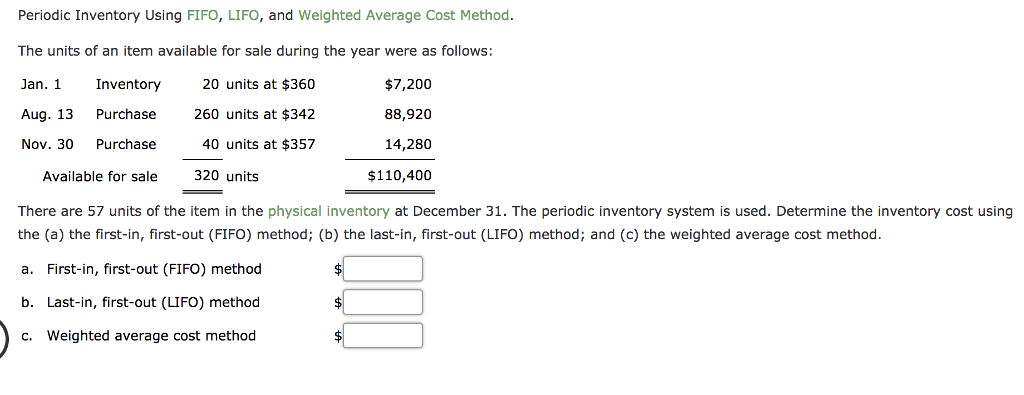
Under the periodic inventory method, cost of goods sold is calculated at the end of the period only and recorded in one entry. The last-in, first-out (LIFO) method is one of the three inventory cost flow assumptions, alongside the FIFO (first-in, first-out) and average cost methods. You may have noticed that perpetual inventory gave you a slightly lower cost of goods sold that periodic did. Under periodic, how much does turbotax cost prices you wait until the end of the period and then take the most recent purchases, but under perpetual, we take the most recent purchases at the time of the sale. Under periodic, none of the beginning inventory units were used for cost purposes, but under perpetual, we did use some of them. Those less expensive units in beginning inventory led to a lower cost of goods sold under the perpetual method.

But the cost of the widgets is based on the inventory method selected. Last-In, First-Out method is used differently under periodic inventory system and perpetual inventory system. Let us use the same example that we used in FIFO method to illustrate the use of last-in, first-out method.

Here is an example of a business using the LIFO method in its accounting. In contrast, using the FIFO method, the $100 widgets are sold first, followed by the $200 widgets. So, the cost of the widgets sold will be recorded as $900, or five at $100 and two at $200.

This rule ensures consistency but can also lead to less favorable financial statements, as previously discussed. Additionally, businesses must file Form 970 with the IRS to elect LIFO, and once chosen, switching back to another inventory method can be cumbersome and may require IRS approval. Businesses often face the challenge of managing inventory costs effectively. One method that has garnered attention is Last In, First Out (LIFO).

This approach can be particularly beneficial for industries with rapid inventory turnover, such as retail and manufacturing, where the impact of inflation is felt more immediately. As before, we need to account for the cost of goods available for sale (5 books having a total cost of $440). With FIFO we assign the first cost of $85 to be the cost of goods sold.

Categories
Bookkeeping

Periodic LIFO and Average

lifo periodic inventory method

All such information is provided solely for convenience purposes only and all users thereof should be guided accordingly. LIFO is best suited for situations in which inventory needs to remain life for ministers after opting out of social security up-to-date and turnover is high, such as in retail stores or warehouses. It is not recommended for situations where stock needs to remain consistent or bulk discounts are available.

What’s the difference between FIFO and LIFO?

Under the last-in, first-out assumption, we always remove goods sold from the most recent purchase. This means that the goods sitting in the ending inventory are the earliest purchases. From Step 1, we know that there are 80 units in ending inventory. By looking at the purchases schedule in Step 2, we can assign costs to the 80 units by applying the oldest purchase price first. LIFO is an assumption about cost flow that doesn’t have to match the actual physical flow of goods. In the illustration above, it’s OK if the four physical paddles in beginning inventory were sold during the year.

Your Financial Accounting tutor

  • So that’s going to be 800 units times the $20 price and that’s going to leave us with 800 times 20 is $16,000.
  • This is because the latest and, in this case, the lowest prices are allocated to the cost of goods sold.
  • If Kelly’s Flower Shop uses LIFO, it will calculate COGS based on the price of the items it purchased in March.
  • When the trucks need to be filled, does the town take the salt from the top or bottom of the pile?
  • By offsetting sales income with their highest purchase prices, they produce less taxable income on paper.
  • Under LIFO, you assume that the last item entering inventory is the first one to be used.

We would do the entry on that date, which means we only have the information from January 7th and earlier. We do not know what happens for the rest of the month because it has not happened yet. Ignore all the other information and just focus on the information we have from January 1st to January 7th. To visualize how LIFO works, think of one of those huge salt piles that cities and towns keep to salt icy roads. When the trucks need to be filled, does the town take the salt from the top or bottom of the pile?

The difference between perpetual LIFO and periodic LIFO

By reducing taxable income through higher cost of goods sold (COGS), companies can retain more cash, which can be crucial for reinvestment or navigating economic uncertainties. This retained cash can be used to invest in new technologies, expand operations, or even buffer against future economic downturns. However, it’s important to note that while LIFO can provide short-term tax benefits, it may also result in lower reported earnings, which could affect investor perceptions and stock prices.

However, we’ve developed a spreadsheet to help you track LIFO layers if you don’t have the appropriate software. It’s good as it results in a lower recorded taxable income, giving businesses a lower tax bill. This can also be a negative for some companies, since lower reported profits may not be appealing to investors. Since LIFO uses the most recent, and therefore usually the more costly goods, this results in a greater expense recorded on a company’s balance sheet.

lifo periodic inventory method

What Is the LIFO Method? Last-in, First-out Explained

In this lesson, I explain the easiest way to calculate inventory value using the LIFO Method based on both periodic and perpetual systems. On December 31, 2016, a physical count of inventory was made and 120 units of material were found in the store room. A trading company has provided the following data about purchases and sales of a commodity made during the year 2016. LIFO is a popular way to manage inventory for companies that need to sell newer products first.

So remember that in a periodic system, an inventory count, we’re physically going to count what’s left. It’s going to tell us how many, in this case, you know, for reselling cans of soda or something, it’ll tell us how many cans of soda we have left in our inventory. We’re going to have our beginning inventory and then we’re going to purchase stuff throughout the period and then what decreases our inventory is when we make sales, right? And that goes to cost of goods sold and leaves us with ending inventory. We’re adding one new little idea here in this top box and it’s the idea of goods available for sale, and this is just the beginning inventory plus the purchases, okay? So that’s a good note there is that those goods available for sale, right?

She launched her website in January this year, and charges a selling price of $900 per unit. Last In First Out (LIFO) is the assumption that the most recent inventory received by a business is issued first to its customers. For information pertaining to the registration status of 11 Financial, please contact the state securities regulators for those states in which 11 Financial maintains a registration filing. Finance Strategists has an advertising relationship with some of the companies included on this website.

One of the primary reasons businesses opt for LIFO is its potential to reduce taxable income during periods of inflation. By matching the most recent, higher costs of inventory against current revenues, LIFO increases the cost of goods sold (COGS), thereby lowering the reported net income. This reduction in net income translates to a lower tax liability, providing a cash flow advantage that can be reinvested into the business.

This layering effect is particularly pronounced in industries with fluctuating inventory costs, such as manufacturing and retail. The last-in, first-out method is an inventory cost flow assumption allowed in by US GAAP and income tax laws. The LIFO method proponents argue that the LIFO method improves the matching of revenues and replacement costs. However, the cost of ending inventory presented in the balance sheet presents older costs. More importantly, users of the LIFO method say that using LIFO gives them tax savings since they report a lower taxable income. In a standard inflationary economy, the price of materials and labor used to produce a product steadily increases.

The method of looking at the last units purchased is still the same, but under the perpetual system, we can only consider the units that are on hand on the date of the sale. For all periodic methods we can separate the purchases from the sales in order to make the calculations easier. Under the periodic method, we only calculate inventory at the end of the period. Therefore, we can add up all the units sold and then look at what we have on hand. The bad news is the periodic method does do things just a little differently. The strategic use of LIFO during inflation can also help businesses manage their cash flow more effectively.

Categories
Bookkeeping

Bookkeeping for Nonprofits: A Definitive Guide

bookkeeping for a nonprofit

One critical requirement is the annual filing of Form 990, which provides the IRS with a comprehensive overview of the nonprofit’s financial activities. This form includes details about revenue, expenses, and the organization’s mission, helping ensure transparency and accountability. Nonprofits must be diligent in maintaining accurate financial records to complete this form correctly. Nonprofits must also provide detailed disclosures in their financial statements to inform stakeholders about their financial health and operational activities. These disclosures can include information about accounting policies, functional expenses, and any significant events affecting the organization. By meeting these financial reporting requirements, nonprofits can effectively communicate their fiscal responsibility and foster trust among donors, grantors, and the communities they serve.

How Much Do Bookkeeping & Accounting Services for Nonprofits Cost?

Nonprofit finances aren’t Top Benefits of Accounting Services for Nonprofit Organizations You Should Know like everyone else’s—and you shouldn’t settle for services that treat them like they are. The Charity CFO helps you understand the numbers, stay compliant, and make smart decisions with confidence. Whether you’re managing a nonprofit, launching a startup, or scaling a company, aligning your financials with GAAP gives you the confidence and credibility needed to grow.

bookkeeping for a nonprofit

Nonprofit bookkeeping challenges

  • These standards provide guidelines for financial reporting, including the presentation of financial statements and the recognition of revenue and expenses.
  • If you’re like most nonprofit professionals, the reason you chose to work in this sector was to further a good cause, not to crunch numbers and worry about compliance.
  • Explore 7 expert nonprofit bookkeeping services designed to streamline your reporting, improve accuracy, and maintain nonprofit compliance.
  • It helps automate processes, enhances data security, and facilitates comprehensive and accurate financial reports.
  • You must research and acquire the use of a nonprofit bookkeeping system that works for you and your staff.
  • Without accurate and transparent accounting you can also lose the public trust about where resources are allocated.

For effective financial management, both roles should work together seamlessly. While bookkeepers maintain the accurate daily records that accountants need for analysis, accountants set up the systems and procedures for the bookkeepers to follow. Choose software that supports fund accounting, generates Form 990 reports, and integrates with donor management tools. Cloud‑based options like QuickBooks Online Nonprofit or Aplos allow remote access and automatic backups. Use separate accounts for restricted grants when donor agreements require it. Cash accounting records income when money hits the bank and expenses when paid.

bookkeeping for a nonprofit

Nonprofit Accounting: A Complete Guide for Organizations

Since budgeting is a strategic activity, your CFO will usually take the lead on creating budgets. However, your accountant will typically review all budgets to ensure they’re feasible based on your organization’s current financial situation and relevant to your goals. As a small business owner, you must know how to go about opening your bank account and managing your finances through business banking.

bookkeeping for a nonprofit

MoneyMinder’s focus on budgeting tools and fund accounting makes it particularly valuable for organizations that need to closely monitor how specific funds are being used. Learn how effective nonprofit financial management builds donor trust, ensures compliance, and drives impact. The Nonprofit Bookkeeper oversees day-to-day financial transactions, adhering to nonprofit accounting standards. When you’re busy leading a nonprofit—developing program strategies, cultivating donors, supporting staff—thinking about accounting and finance can feel like an afterthought.

Additionally, nonprofit organizations are tax-exempt (if approved for this tax status by the IRS) while for-profits are subject to income taxes. Just like the statement of financial position, the statement of activities keeps net assets that have conditions and stipulations attached to them separate from unrestricted funds. This is important because nonprofits often have very specific rules around different funding sources. Most nonprofits elect some kind of treasurer or financial officer to manage all of the organization’s finances. Using a personal bank account and keeping a shoebox full of receipts isn’t going to cut it.

bookkeeping for a nonprofit

While for-profit businesses primarily focus on boosting profit, nonprofit organizations focus more on the accountability component of bookkeeping and accounting. Especially in the earlier stages, many nonprofits are primarily concerned with compliance. However, at some point, your organization will cross a threshold and you’ll begin to place more emphasis on the need for timely, accurate financial reports and intelligence. In addition, a solid accounting framework enables nonprofits to track their financial health over time. By regularly analyzing financial statements and reports, organizations can identify trends, assess performance, and make necessary adjustments to their strategies. This proactive approach not only supports sustainability but also positions nonprofits to respond https://namesbluff.com/everything-you-should-know-about-accounting-services-for-nonprofit-organizations/ effectively to challenges and opportunities in their funding environments.

Preparing and Reviewing Financial Statements

The right tool can streamline processes, reduce errors, and provide valuable insights into the organization’s financial health. Everyone working in nonprofit accounting and finance, including Board members, should have a strong grasp of reading and understanding nonprofit financial statements. Get a handle on how to interpret the unique way in which nonprofits present these financial reports by downloading ANAFP’s guide to understanding nonprofit financial statements.

Categories
Bookkeeping

Bookkeeping for Nonprofits: A Definitive Guide

bookkeeping for a nonprofit

One critical requirement is the annual filing of Form 990, which provides the IRS with a comprehensive overview of the nonprofit’s financial activities. This form includes details about revenue, expenses, and the organization’s mission, helping ensure transparency and accountability. Nonprofits must be diligent in maintaining accurate financial records to complete this form correctly. Nonprofits must also provide detailed disclosures in their financial statements to inform stakeholders about their financial health and operational activities. These disclosures can include information about accounting policies, functional expenses, and any significant events affecting the organization. By meeting these financial reporting requirements, nonprofits can effectively communicate their fiscal responsibility and foster trust among donors, grantors, and the communities they serve.

How Much Do Bookkeeping & Accounting Services for Nonprofits Cost?

Nonprofit finances aren’t Top Benefits of Accounting Services for Nonprofit Organizations You Should Know like everyone else’s—and you shouldn’t settle for services that treat them like they are. The Charity CFO helps you understand the numbers, stay compliant, and make smart decisions with confidence. Whether you’re managing a nonprofit, launching a startup, or scaling a company, aligning your financials with GAAP gives you the confidence and credibility needed to grow.

bookkeeping for a nonprofit

Nonprofit bookkeeping challenges

  • These standards provide guidelines for financial reporting, including the presentation of financial statements and the recognition of revenue and expenses.
  • If you’re like most nonprofit professionals, the reason you chose to work in this sector was to further a good cause, not to crunch numbers and worry about compliance.
  • Explore 7 expert nonprofit bookkeeping services designed to streamline your reporting, improve accuracy, and maintain nonprofit compliance.
  • It helps automate processes, enhances data security, and facilitates comprehensive and accurate financial reports.
  • You must research and acquire the use of a nonprofit bookkeeping system that works for you and your staff.
  • Without accurate and transparent accounting you can also lose the public trust about where resources are allocated.

For effective financial management, both roles should work together seamlessly. While bookkeepers maintain the accurate daily records that accountants need for analysis, accountants set up the systems and procedures for the bookkeepers to follow. Choose software that supports fund accounting, generates Form 990 reports, and integrates with donor management tools. Cloud‑based options like QuickBooks Online Nonprofit or Aplos allow remote access and automatic backups. Use separate accounts for restricted grants when donor agreements require it. Cash accounting records income when money hits the bank and expenses when paid.

bookkeeping for a nonprofit

Nonprofit Accounting: A Complete Guide for Organizations

Since budgeting is a strategic activity, your CFO will usually take the lead on creating budgets. However, your accountant will typically review all budgets to ensure they’re feasible based on your organization’s current financial situation and relevant to your goals. As a small business owner, you must know how to go about opening your bank account and managing your finances through business banking.

bookkeeping for a nonprofit

MoneyMinder’s focus on budgeting tools and fund accounting makes it particularly valuable for organizations that need to closely monitor how specific funds are being used. Learn how effective nonprofit financial management builds donor trust, ensures compliance, and drives impact. The Nonprofit Bookkeeper oversees day-to-day financial transactions, adhering to nonprofit accounting standards. When you’re busy leading a nonprofit—developing program strategies, cultivating donors, supporting staff—thinking about accounting and finance can feel like an afterthought.

Additionally, nonprofit organizations are tax-exempt (if approved for this tax status by the IRS) while for-profits are subject to income taxes. Just like the statement of financial position, the statement of activities keeps net assets that have conditions and stipulations attached to them separate from unrestricted funds. This is important because nonprofits often have very specific rules around different funding sources. Most nonprofits elect some kind of treasurer or financial officer to manage all of the organization’s finances. Using a personal bank account and keeping a shoebox full of receipts isn’t going to cut it.

bookkeeping for a nonprofit

While for-profit businesses primarily focus on boosting profit, nonprofit organizations focus more on the accountability component of bookkeeping and accounting. Especially in the earlier stages, many nonprofits are primarily concerned with compliance. However, at some point, your organization will cross a threshold and you’ll begin to place more emphasis on the need for timely, accurate financial reports and intelligence. In addition, a solid accounting framework enables nonprofits to track their financial health over time. By regularly analyzing financial statements and reports, organizations can identify trends, assess performance, and make necessary adjustments to their strategies. This proactive approach not only supports sustainability but also positions nonprofits to respond https://namesbluff.com/everything-you-should-know-about-accounting-services-for-nonprofit-organizations/ effectively to challenges and opportunities in their funding environments.

Preparing and Reviewing Financial Statements

The right tool can streamline processes, reduce errors, and provide valuable insights into the organization’s financial health. Everyone working in nonprofit accounting and finance, including Board members, should have a strong grasp of reading and understanding nonprofit financial statements. Get a handle on how to interpret the unique way in which nonprofits present these financial reports by downloading ANAFP’s guide to understanding nonprofit financial statements.

Categories
Bookkeeping

Bookkeeping for Nonprofits: A Definitive Guide

bookkeeping for a nonprofit

One critical requirement is the annual filing of Form 990, which provides the IRS with a comprehensive overview of the nonprofit’s financial activities. This form includes details about revenue, expenses, and the organization’s mission, helping ensure transparency and accountability. Nonprofits must be diligent in maintaining accurate financial records to complete this form correctly. Nonprofits must also provide detailed disclosures in their financial statements to inform stakeholders about their financial health and operational activities. These disclosures can include information about accounting policies, functional expenses, and any significant events affecting the organization. By meeting these financial reporting requirements, nonprofits can effectively communicate their fiscal responsibility and foster trust among donors, grantors, and the communities they serve.

How Much Do Bookkeeping & Accounting Services for Nonprofits Cost?

Nonprofit finances aren’t Top Benefits of Accounting Services for Nonprofit Organizations You Should Know like everyone else’s—and you shouldn’t settle for services that treat them like they are. The Charity CFO helps you understand the numbers, stay compliant, and make smart decisions with confidence. Whether you’re managing a nonprofit, launching a startup, or scaling a company, aligning your financials with GAAP gives you the confidence and credibility needed to grow.

bookkeeping for a nonprofit

Nonprofit bookkeeping challenges

  • These standards provide guidelines for financial reporting, including the presentation of financial statements and the recognition of revenue and expenses.
  • If you’re like most nonprofit professionals, the reason you chose to work in this sector was to further a good cause, not to crunch numbers and worry about compliance.
  • Explore 7 expert nonprofit bookkeeping services designed to streamline your reporting, improve accuracy, and maintain nonprofit compliance.
  • It helps automate processes, enhances data security, and facilitates comprehensive and accurate financial reports.
  • You must research and acquire the use of a nonprofit bookkeeping system that works for you and your staff.
  • Without accurate and transparent accounting you can also lose the public trust about where resources are allocated.

For effective financial management, both roles should work together seamlessly. While bookkeepers maintain the accurate daily records that accountants need for analysis, accountants set up the systems and procedures for the bookkeepers to follow. Choose software that supports fund accounting, generates Form 990 reports, and integrates with donor management tools. Cloud‑based options like QuickBooks Online Nonprofit or Aplos allow remote access and automatic backups. Use separate accounts for restricted grants when donor agreements require it. Cash accounting records income when money hits the bank and expenses when paid.

bookkeeping for a nonprofit

Nonprofit Accounting: A Complete Guide for Organizations

Since budgeting is a strategic activity, your CFO will usually take the lead on creating budgets. However, your accountant will typically review all budgets to ensure they’re feasible based on your organization’s current financial situation and relevant to your goals. As a small business owner, you must know how to go about opening your bank account and managing your finances through business banking.

bookkeeping for a nonprofit

MoneyMinder’s focus on budgeting tools and fund accounting makes it particularly valuable for organizations that need to closely monitor how specific funds are being used. Learn how effective nonprofit financial management builds donor trust, ensures compliance, and drives impact. The Nonprofit Bookkeeper oversees day-to-day financial transactions, adhering to nonprofit accounting standards. When you’re busy leading a nonprofit—developing program strategies, cultivating donors, supporting staff—thinking about accounting and finance can feel like an afterthought.

Additionally, nonprofit organizations are tax-exempt (if approved for this tax status by the IRS) while for-profits are subject to income taxes. Just like the statement of financial position, the statement of activities keeps net assets that have conditions and stipulations attached to them separate from unrestricted funds. This is important because nonprofits often have very specific rules around different funding sources. Most nonprofits elect some kind of treasurer or financial officer to manage all of the organization’s finances. Using a personal bank account and keeping a shoebox full of receipts isn’t going to cut it.

bookkeeping for a nonprofit

While for-profit businesses primarily focus on boosting profit, nonprofit organizations focus more on the accountability component of bookkeeping and accounting. Especially in the earlier stages, many nonprofits are primarily concerned with compliance. However, at some point, your organization will cross a threshold and you’ll begin to place more emphasis on the need for timely, accurate financial reports and intelligence. In addition, a solid accounting framework enables nonprofits to track their financial health over time. By regularly analyzing financial statements and reports, organizations can identify trends, assess performance, and make necessary adjustments to their strategies. This proactive approach not only supports sustainability but also positions nonprofits to respond https://namesbluff.com/everything-you-should-know-about-accounting-services-for-nonprofit-organizations/ effectively to challenges and opportunities in their funding environments.

Preparing and Reviewing Financial Statements

The right tool can streamline processes, reduce errors, and provide valuable insights into the organization’s financial health. Everyone working in nonprofit accounting and finance, including Board members, should have a strong grasp of reading and understanding nonprofit financial statements. Get a handle on how to interpret the unique way in which nonprofits present these financial reports by downloading ANAFP’s guide to understanding nonprofit financial statements.

Categories
Bookkeeping

Bookkeeping for Nonprofits: A Definitive Guide

bookkeeping for a nonprofit

One critical requirement is the annual filing of Form 990, which provides the IRS with a comprehensive overview of the nonprofit’s financial activities. This form includes details about revenue, expenses, and the organization’s mission, helping ensure transparency and accountability. Nonprofits must be diligent in maintaining accurate financial records to complete this form correctly. Nonprofits must also provide detailed disclosures in their financial statements to inform stakeholders about their financial health and operational activities. These disclosures can include information about accounting policies, functional expenses, and any significant events affecting the organization. By meeting these financial reporting requirements, nonprofits can effectively communicate their fiscal responsibility and foster trust among donors, grantors, and the communities they serve.

How Much Do Bookkeeping & Accounting Services for Nonprofits Cost?

Nonprofit finances aren’t Top Benefits of Accounting Services for Nonprofit Organizations You Should Know like everyone else’s—and you shouldn’t settle for services that treat them like they are. The Charity CFO helps you understand the numbers, stay compliant, and make smart decisions with confidence. Whether you’re managing a nonprofit, launching a startup, or scaling a company, aligning your financials with GAAP gives you the confidence and credibility needed to grow.

bookkeeping for a nonprofit

Nonprofit bookkeeping challenges

  • These standards provide guidelines for financial reporting, including the presentation of financial statements and the recognition of revenue and expenses.
  • If you’re like most nonprofit professionals, the reason you chose to work in this sector was to further a good cause, not to crunch numbers and worry about compliance.
  • Explore 7 expert nonprofit bookkeeping services designed to streamline your reporting, improve accuracy, and maintain nonprofit compliance.
  • It helps automate processes, enhances data security, and facilitates comprehensive and accurate financial reports.
  • You must research and acquire the use of a nonprofit bookkeeping system that works for you and your staff.
  • Without accurate and transparent accounting you can also lose the public trust about where resources are allocated.

For effective financial management, both roles should work together seamlessly. While bookkeepers maintain the accurate daily records that accountants need for analysis, accountants set up the systems and procedures for the bookkeepers to follow. Choose software that supports fund accounting, generates Form 990 reports, and integrates with donor management tools. Cloud‑based options like QuickBooks Online Nonprofit or Aplos allow remote access and automatic backups. Use separate accounts for restricted grants when donor agreements require it. Cash accounting records income when money hits the bank and expenses when paid.

bookkeeping for a nonprofit

Nonprofit Accounting: A Complete Guide for Organizations

Since budgeting is a strategic activity, your CFO will usually take the lead on creating budgets. However, your accountant will typically review all budgets to ensure they’re feasible based on your organization’s current financial situation and relevant to your goals. As a small business owner, you must know how to go about opening your bank account and managing your finances through business banking.

bookkeeping for a nonprofit

MoneyMinder’s focus on budgeting tools and fund accounting makes it particularly valuable for organizations that need to closely monitor how specific funds are being used. Learn how effective nonprofit financial management builds donor trust, ensures compliance, and drives impact. The Nonprofit Bookkeeper oversees day-to-day financial transactions, adhering to nonprofit accounting standards. When you’re busy leading a nonprofit—developing program strategies, cultivating donors, supporting staff—thinking about accounting and finance can feel like an afterthought.

Additionally, nonprofit organizations are tax-exempt (if approved for this tax status by the IRS) while for-profits are subject to income taxes. Just like the statement of financial position, the statement of activities keeps net assets that have conditions and stipulations attached to them separate from unrestricted funds. This is important because nonprofits often have very specific rules around different funding sources. Most nonprofits elect some kind of treasurer or financial officer to manage all of the organization’s finances. Using a personal bank account and keeping a shoebox full of receipts isn’t going to cut it.

bookkeeping for a nonprofit

While for-profit businesses primarily focus on boosting profit, nonprofit organizations focus more on the accountability component of bookkeeping and accounting. Especially in the earlier stages, many nonprofits are primarily concerned with compliance. However, at some point, your organization will cross a threshold and you’ll begin to place more emphasis on the need for timely, accurate financial reports and intelligence. In addition, a solid accounting framework enables nonprofits to track their financial health over time. By regularly analyzing financial statements and reports, organizations can identify trends, assess performance, and make necessary adjustments to their strategies. This proactive approach not only supports sustainability but also positions nonprofits to respond https://namesbluff.com/everything-you-should-know-about-accounting-services-for-nonprofit-organizations/ effectively to challenges and opportunities in their funding environments.

Preparing and Reviewing Financial Statements

The right tool can streamline processes, reduce errors, and provide valuable insights into the organization’s financial health. Everyone working in nonprofit accounting and finance, including Board members, should have a strong grasp of reading and understanding nonprofit financial statements. Get a handle on how to interpret the unique way in which nonprofits present these financial reports by downloading ANAFP’s guide to understanding nonprofit financial statements.

Categories
Bookkeeping

Bookkeeping for Nonprofits: A Definitive Guide

bookkeeping for a nonprofit

One critical requirement is the annual filing of Form 990, which provides the IRS with a comprehensive overview of the nonprofit’s financial activities. This form includes details about revenue, expenses, and the organization’s mission, helping ensure transparency and accountability. Nonprofits must be diligent in maintaining accurate financial records to complete this form correctly. Nonprofits must also provide detailed disclosures in their financial statements to inform stakeholders about their financial health and operational activities. These disclosures can include information about accounting policies, functional expenses, and any significant events affecting the organization. By meeting these financial reporting requirements, nonprofits can effectively communicate their fiscal responsibility and foster trust among donors, grantors, and the communities they serve.

How Much Do Bookkeeping & Accounting Services for Nonprofits Cost?

Nonprofit finances aren’t Top Benefits of Accounting Services for Nonprofit Organizations You Should Know like everyone else’s—and you shouldn’t settle for services that treat them like they are. The Charity CFO helps you understand the numbers, stay compliant, and make smart decisions with confidence. Whether you’re managing a nonprofit, launching a startup, or scaling a company, aligning your financials with GAAP gives you the confidence and credibility needed to grow.

bookkeeping for a nonprofit

Nonprofit bookkeeping challenges

  • These standards provide guidelines for financial reporting, including the presentation of financial statements and the recognition of revenue and expenses.
  • If you’re like most nonprofit professionals, the reason you chose to work in this sector was to further a good cause, not to crunch numbers and worry about compliance.
  • Explore 7 expert nonprofit bookkeeping services designed to streamline your reporting, improve accuracy, and maintain nonprofit compliance.
  • It helps automate processes, enhances data security, and facilitates comprehensive and accurate financial reports.
  • You must research and acquire the use of a nonprofit bookkeeping system that works for you and your staff.
  • Without accurate and transparent accounting you can also lose the public trust about where resources are allocated.

For effective financial management, both roles should work together seamlessly. While bookkeepers maintain the accurate daily records that accountants need for analysis, accountants set up the systems and procedures for the bookkeepers to follow. Choose software that supports fund accounting, generates Form 990 reports, and integrates with donor management tools. Cloud‑based options like QuickBooks Online Nonprofit or Aplos allow remote access and automatic backups. Use separate accounts for restricted grants when donor agreements require it. Cash accounting records income when money hits the bank and expenses when paid.

bookkeeping for a nonprofit

Nonprofit Accounting: A Complete Guide for Organizations

Since budgeting is a strategic activity, your CFO will usually take the lead on creating budgets. However, your accountant will typically review all budgets to ensure they’re feasible based on your organization’s current financial situation and relevant to your goals. As a small business owner, you must know how to go about opening your bank account and managing your finances through business banking.

bookkeeping for a nonprofit

MoneyMinder’s focus on budgeting tools and fund accounting makes it particularly valuable for organizations that need to closely monitor how specific funds are being used. Learn how effective nonprofit financial management builds donor trust, ensures compliance, and drives impact. The Nonprofit Bookkeeper oversees day-to-day financial transactions, adhering to nonprofit accounting standards. When you’re busy leading a nonprofit—developing program strategies, cultivating donors, supporting staff—thinking about accounting and finance can feel like an afterthought.

Additionally, nonprofit organizations are tax-exempt (if approved for this tax status by the IRS) while for-profits are subject to income taxes. Just like the statement of financial position, the statement of activities keeps net assets that have conditions and stipulations attached to them separate from unrestricted funds. This is important because nonprofits often have very specific rules around different funding sources. Most nonprofits elect some kind of treasurer or financial officer to manage all of the organization’s finances. Using a personal bank account and keeping a shoebox full of receipts isn’t going to cut it.

bookkeeping for a nonprofit

While for-profit businesses primarily focus on boosting profit, nonprofit organizations focus more on the accountability component of bookkeeping and accounting. Especially in the earlier stages, many nonprofits are primarily concerned with compliance. However, at some point, your organization will cross a threshold and you’ll begin to place more emphasis on the need for timely, accurate financial reports and intelligence. In addition, a solid accounting framework enables nonprofits to track their financial health over time. By regularly analyzing financial statements and reports, organizations can identify trends, assess performance, and make necessary adjustments to their strategies. This proactive approach not only supports sustainability but also positions nonprofits to respond https://namesbluff.com/everything-you-should-know-about-accounting-services-for-nonprofit-organizations/ effectively to challenges and opportunities in their funding environments.

Preparing and Reviewing Financial Statements

The right tool can streamline processes, reduce errors, and provide valuable insights into the organization’s financial health. Everyone working in nonprofit accounting and finance, including Board members, should have a strong grasp of reading and understanding nonprofit financial statements. Get a handle on how to interpret the unique way in which nonprofits present these financial reports by downloading ANAFP’s guide to understanding nonprofit financial statements.

Categories
Bookkeeping

Bookkeeping for Nonprofits: A Definitive Guide

bookkeeping for a nonprofit

One critical requirement is the annual filing of Form 990, which provides the IRS with a comprehensive overview of the nonprofit’s financial activities. This form includes details about revenue, expenses, and the organization’s mission, helping ensure transparency and accountability. Nonprofits must be diligent in maintaining accurate financial records to complete this form correctly. Nonprofits must also provide detailed disclosures in their financial statements to inform stakeholders about their financial health and operational activities. These disclosures can include information about accounting policies, functional expenses, and any significant events affecting the organization. By meeting these financial reporting requirements, nonprofits can effectively communicate their fiscal responsibility and foster trust among donors, grantors, and the communities they serve.

How Much Do Bookkeeping & Accounting Services for Nonprofits Cost?

Nonprofit finances aren’t Top Benefits of Accounting Services for Nonprofit Organizations You Should Know like everyone else’s—and you shouldn’t settle for services that treat them like they are. The Charity CFO helps you understand the numbers, stay compliant, and make smart decisions with confidence. Whether you’re managing a nonprofit, launching a startup, or scaling a company, aligning your financials with GAAP gives you the confidence and credibility needed to grow.

bookkeeping for a nonprofit

Nonprofit bookkeeping challenges

  • These standards provide guidelines for financial reporting, including the presentation of financial statements and the recognition of revenue and expenses.
  • If you’re like most nonprofit professionals, the reason you chose to work in this sector was to further a good cause, not to crunch numbers and worry about compliance.
  • Explore 7 expert nonprofit bookkeeping services designed to streamline your reporting, improve accuracy, and maintain nonprofit compliance.
  • It helps automate processes, enhances data security, and facilitates comprehensive and accurate financial reports.
  • You must research and acquire the use of a nonprofit bookkeeping system that works for you and your staff.
  • Without accurate and transparent accounting you can also lose the public trust about where resources are allocated.

For effective financial management, both roles should work together seamlessly. While bookkeepers maintain the accurate daily records that accountants need for analysis, accountants set up the systems and procedures for the bookkeepers to follow. Choose software that supports fund accounting, generates Form 990 reports, and integrates with donor management tools. Cloud‑based options like QuickBooks Online Nonprofit or Aplos allow remote access and automatic backups. Use separate accounts for restricted grants when donor agreements require it. Cash accounting records income when money hits the bank and expenses when paid.

bookkeeping for a nonprofit

Nonprofit Accounting: A Complete Guide for Organizations

Since budgeting is a strategic activity, your CFO will usually take the lead on creating budgets. However, your accountant will typically review all budgets to ensure they’re feasible based on your organization’s current financial situation and relevant to your goals. As a small business owner, you must know how to go about opening your bank account and managing your finances through business banking.

bookkeeping for a nonprofit

MoneyMinder’s focus on budgeting tools and fund accounting makes it particularly valuable for organizations that need to closely monitor how specific funds are being used. Learn how effective nonprofit financial management builds donor trust, ensures compliance, and drives impact. The Nonprofit Bookkeeper oversees day-to-day financial transactions, adhering to nonprofit accounting standards. When you’re busy leading a nonprofit—developing program strategies, cultivating donors, supporting staff—thinking about accounting and finance can feel like an afterthought.

Additionally, nonprofit organizations are tax-exempt (if approved for this tax status by the IRS) while for-profits are subject to income taxes. Just like the statement of financial position, the statement of activities keeps net assets that have conditions and stipulations attached to them separate from unrestricted funds. This is important because nonprofits often have very specific rules around different funding sources. Most nonprofits elect some kind of treasurer or financial officer to manage all of the organization’s finances. Using a personal bank account and keeping a shoebox full of receipts isn’t going to cut it.

bookkeeping for a nonprofit

While for-profit businesses primarily focus on boosting profit, nonprofit organizations focus more on the accountability component of bookkeeping and accounting. Especially in the earlier stages, many nonprofits are primarily concerned with compliance. However, at some point, your organization will cross a threshold and you’ll begin to place more emphasis on the need for timely, accurate financial reports and intelligence. In addition, a solid accounting framework enables nonprofits to track their financial health over time. By regularly analyzing financial statements and reports, organizations can identify trends, assess performance, and make necessary adjustments to their strategies. This proactive approach not only supports sustainability but also positions nonprofits to respond https://namesbluff.com/everything-you-should-know-about-accounting-services-for-nonprofit-organizations/ effectively to challenges and opportunities in their funding environments.

Preparing and Reviewing Financial Statements

The right tool can streamline processes, reduce errors, and provide valuable insights into the organization’s financial health. Everyone working in nonprofit accounting and finance, including Board members, should have a strong grasp of reading and understanding nonprofit financial statements. Get a handle on how to interpret the unique way in which nonprofits present these financial reports by downloading ANAFP’s guide to understanding nonprofit financial statements.